 Set as preferred source


Artificial intelligence is no longer an incremental layer added to cloud-era stacks. Tech Trends 2026 reframes the AI cycle from speed of innovation to consequence of scale. Adoption curves have collapsed: generative AI reached roughly 100 million users in about two months, and leading platforms now serve more than 800 million weekly users, approaching 10% of the global population. At this scale, AI behaves less like an application and more like infrastructure.
What once could be addressed incrementally now compounds. Persistent inference loads, autonomous decision-making, and cyber-physical deployment expose architectures never designed for continuous intelligence. Treating AI as just another digital tool accumulates fragility. Treating it as infrastructure resets the basis of advantage.
Three forces converge. First, AI workloads are moving decisively from pilots into production, triggering an infrastructure reckoning as inference costs fall while aggregate spend rises. Second, agentic and physical AI challenge human-centric operating models, exposing gaps in accountability, coordination, and security. Third, geopolitical and data-sovereignty pressures are reshaping where AI can run, who controls it, and how risk is priced. Together, these shifts redefine capital allocation, resilience, and competitive advantage.
The scale economics: why cost curves don’t behave
AI innovation no longer accumulates linearly; it compounds. Deloitte documents a feedback loop in which better models drive adoption, adoption generates data, data attracts capital, and capital accelerates infrastructure investment. The result is a widening performance gap. AI-native companies are already scaling revenues roughly five times faster than prior SaaS cohorts, compressing competitive response windows and resetting valuation logic.
Cost dynamics reinforce the same lesson. Inference costs have fallen dramatically—by roughly 280-fold in two years—yet many large organizations now report monthly AI infrastructure bills in the tens of millions. Usage growth overwhelms efficiency gains. Return on investment is governed less by unit cost and more by utilization discipline, workload placement, and demand control. Static roadmaps and cloud-first assumptions increasingly underperform.
A practical inflection point emerges from the data. When cloud-based AI workloads approach roughly 60–70% of the cost of equivalent on-premises infrastructure, economics flip. At that threshold, predictable, high-volume inference favors local deployment. This is not an ideological pivot away from cloud, but a financial one—providing a clear trigger for rebalancing operating and capital expenditure.
Infrastructure as strategy: hybrid, local, and sovereign
Infrastructure decisions are no longer neutral. Compute placement now embeds assumptions about energy availability, regulatory stability, and geopolitical alignment. This reality underpins the rise of sovereign AI and infrastructure repatriation. Governments and regulated sectors increasingly treat data and intelligence as strategic assets requiring local control, mirroring historical approaches to power grids or water systems.
Closely related is the architectural shift toward bringing AI to data rather than moving data to AI. Hosting models closer to sensitive datasets protects intellectual property, reduces exposure, and enables high-throughput inference without unnecessary data movement. Information architecture and competitive defensibility converge.
The operating model gap: agents at pilot scale, not production scale
Agentic AI exposes structural readiness gaps most clearly. While approximately 38% of organizations are piloting agentic systems, only about 11% have them in production. A further 35% report having no formal agentic strategy at all. The constraint is not technological maturity. It is operating design.
Without redesigned workflows, clear ownership, and bounded authority, agents amplify broken processes rather than resolve them. This is the practical meaning of “AI at scale”: automation becomes systemic, and systemic automation magnifies ambiguity.
As agents proliferate, they increasingly resemble a new category of labor. Managing them requires structures analogous to workforce governance: identity, onboarding, access control, performance measurement, and retirement. Without these controls, digital labor accumulates silent risk.
The jagged frontier: designing work for human–AI coordination
Deloitte highlights the “jagged frontier” of AI capability—strong in narrow analytical tasks, fragile in contextual judgment and social reasoning. Misallocating work across this frontier creates productivity drag through rework and oversight overhead. Sustainable performance depends on continuous task redesign, not maximal automation.
The objective shifts from deploying AI to coordinating it: defining where autonomy is safe, where oversight is required, and where human judgment remains the binding constraint.
Physical AI and the expanding risk perimeter
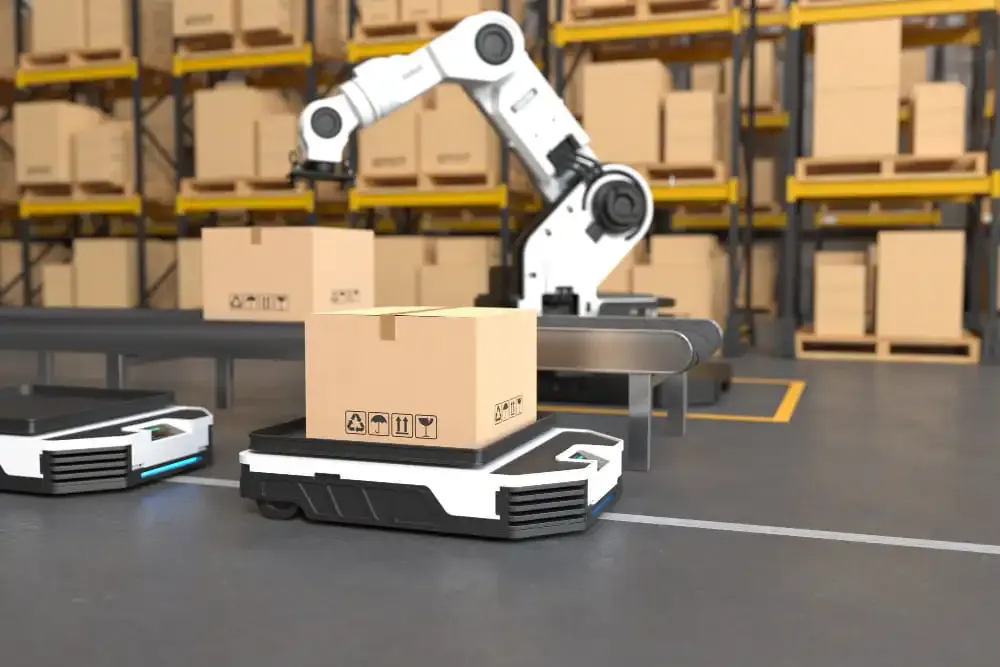
Across regions, differentiation increasingly reflects system coherence rather than model sophistication. The US continues to lead in AI platforms and infrastructure, benefiting from capital depth and hyperscaler ecosystems. Europe emphasizes governance, compliance, and data residency, increasing the strategic value of sovereign and portable architectures. Asia-Pacific shows strength in physical AI adoption, particularly in manufacturing and logistics, where automation links directly to throughput and labor constraints.
In these environments, projections point to millions of physical or humanoid systems deployed by the mid-2030s, expanding AI from digital workflows into safety-critical domains. As intelligence moves into physical systems, risk migrates from the periphery to the center of operations.
Where risk concentrates as scale increases
As AI becomes embedded in core operations, exposure becomes more structural than episodic.
Cost exposure intensifies as usage scales faster than efficiency gains. Governance gaps around agentic systems increase regulatory and operational risk. Early infrastructure lock-in constrains strategic optionality as sovereignty and regionalization pressures grow. Cyber risk extends into physical environments, amplifying tail events. Misunderstanding the jagged frontier of AI capability produces persistent productivity drag rather than discrete failure.
These risks rarely surface all at once. They accumulate quietly as scale increases. Addressing them requires architectural choices, not point solutions.
Closing perspective
Tech Trends 2026 does not predict a slowdown in AI adoption. It signals maturation. As AI becomes foundational, advantage shifts from novelty to architecture, from speed to discipline, and from tools to systems.
The next phase of AI-led growth will favor those that redesign for scale before scale forces the redesign.
Source
Insights based on Tech Trends 2026, Deloitte Insights.
Contact [email protected] if you have trouble accessing.