
Support & Care
Accessibility analysis
95.9% of home pages had detected WCAG 2 failures.
Low contrast text, below the WCAG 2 AA thresholds, was found on 81% of home pages.
According to WebAIM
 IxDF Certificate in Accessibility Design
Our services

Accessibility review

Usability testing

Accessibility consulting

mobile app accessibility
Our accessibility enhancement process
Our approach to ensuring digital accessibility encompasses a methodical and comprehensive process designed to enhance your project's usability and inclusivity.
Types of accessibility
Visual 
Supports individuals with vision impairments through features like screen readers, high-contrast modes, and adjustable text sizes to ensure all visual content is accessible.
Schedule a call
Hearing 
Provides solutions for the deaf or hard of hearing with closed captions, visual alerts, and sign language integration to make auditory information accessible.
Schedule a call Mobility 
Offers navigation aids like keyboard-only access and voice controls, ensuring users with mobility impairments can interact effortlessly with digital content.
Schedule a call Cognitive 
Designed for users with cognitive challenges, utilizing straightforward language, consistent navigation, and adjustable settings to aid understanding and interaction.
Schedule a callWhy ensuring website accessibility is crucial today?
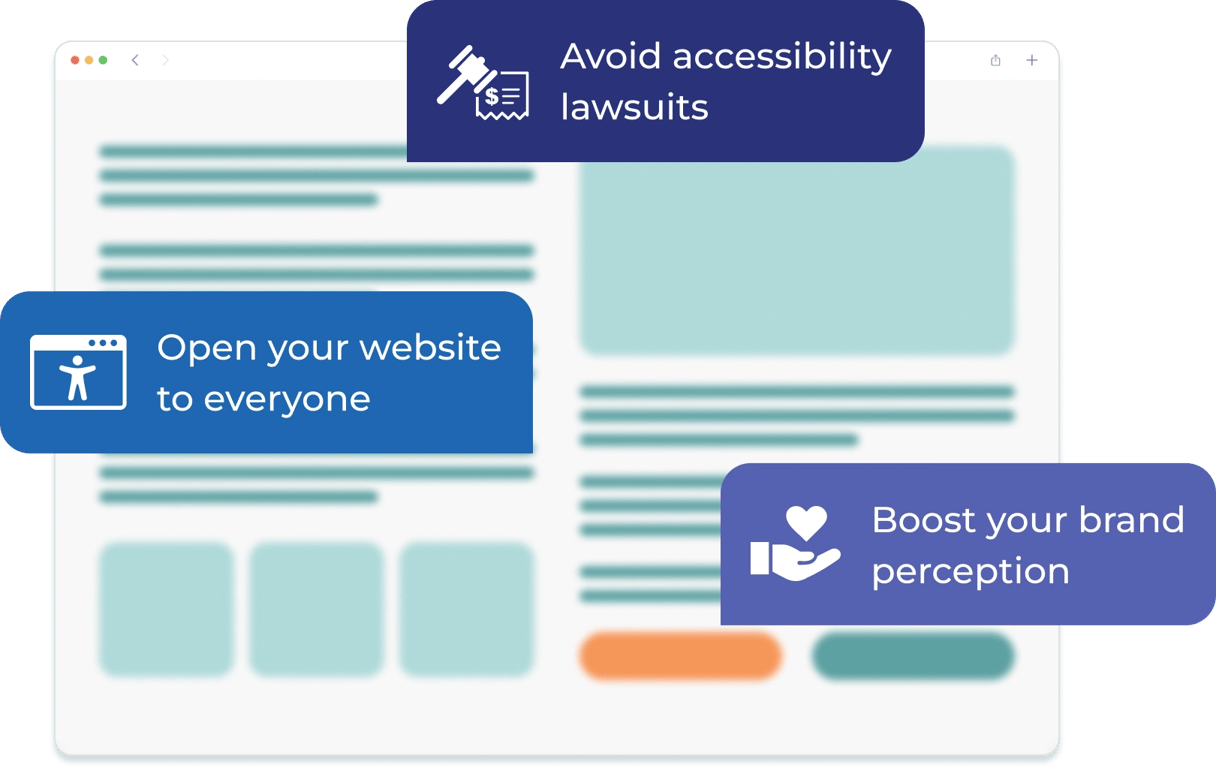
Accessibility is essential for ensuring that your website is usable and welcoming to all users, including those with disabilities. It not only helps you comply with legal requirements but also expands your audience reach by making your content accessible to a wider range of people. This inclusivity can enhance user satisfaction, improve SEO rankings, and demonstrate your commitment to social responsibility. By prioritizing accessibility, you create a more positive, engaging, and accessible digital experience for everyone.
Making your website accessible is easier than ever!
Contact us now to discuss your needs and see how we can help you build a more inclusive online presence.
Overview of important accessibility standards
Digital accessibility is governed by a variety of standards and laws across the globe, each designed to ensure that websites and digital content are accessible to all users, including those with disabilities.

WCAG
WCAG (Web Content Accessibility Guidelines) is a set of internationally recognized guidelines developed by the World Wide Web Consortium (W3C). It outlines how to make web content more accessible to people with disabilities. WCAG is divided into three levels of conformance:
Level A:
The most basic web accessibility features.Level AA:
Deals with the biggest and most common barriers for disabled users.Level AAA:
The highest and most complex level of web accessibility.

Section 508
Section 508 is a U.S. federal law that mandates all government agencies and their contractors provide accessible digital content. It applies to websites, software, electronic documents, and multimedia, ensuring that individuals with disabilities, including federal employees and the public, can access the same information and services as others.
Section 508 aligns with WCAG 2.0 standards at Levels A and AA. Regular audits and updates are necessary to maintain compliance, especially as technologies evolve.
ADA
The ADA is a comprehensive U.S. civil rights law that prohibits discrimination against individuals with disabilities across many areas, including digital content. While the law originally focused on physical spaces, it has increasingly been interpreted to apply to websites and digital platforms.
The ADA requires that businesses and organizations ensure their websites and apps are accessible to everyone, offering equal access and functionality to individuals with disabilities. Non-compliance can result in legal actions, fines, and reputational harm.

BITV
BITV (Barrierefreie Informationstechnik-Verordnung) is a German law that mandates digital accessibility, especially for public sector websites and apps, ensuring equal access for users with disabilities.
Alignment with WCAG: BITV closely follows WCAG 2.1 standards, focusing on Levels A and AA to remove digital barriers. Applies to all public sector digital content, requiring regular updates and compliance checks.
Understanding the impact of accessibility choices
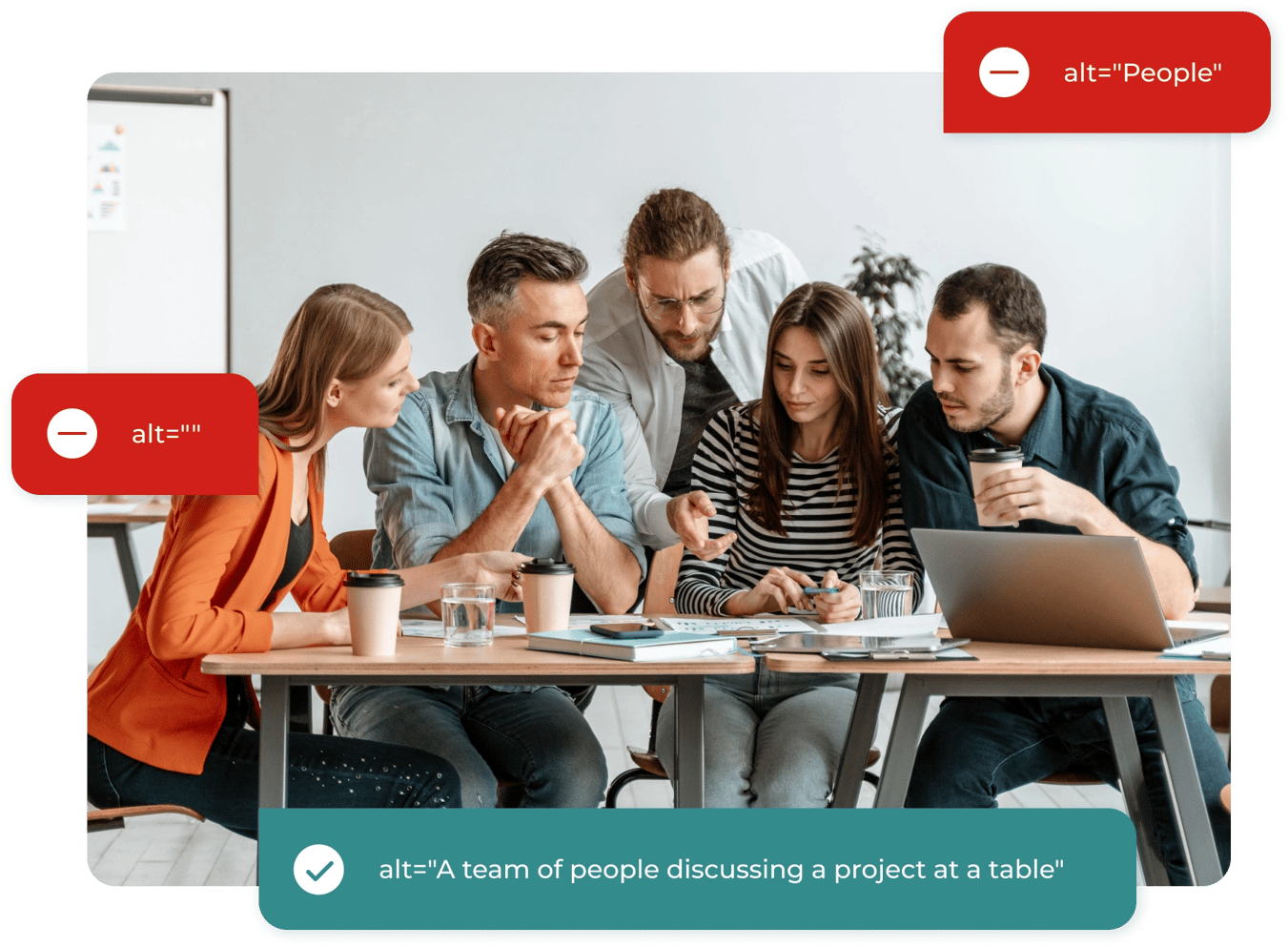
Providing detailed and context-rich alt text is crucial for creating an inclusive digital experience. By making thoughtful decisions about alt text, you not only comply with accessibility standards but also enhance the user experience for all visitors, including those with disabilities. This leads to higher user satisfaction, improved engagement, and potentially better SEO rankings.
The photo example highlights why it's essential to write accurate and descriptive alt text for images. For users with vision impairments, screen readers rely on alt text to convey what’s depicted in the image. A vague or incorrect description fails to communicate the content, leaving these users without important context. On the other hand, a well-crafted alt text allows them to visualize the scene more clearly, enhancing their experience and engagement with your content.


Cloud-native migration, optimization, and mobile modernization for a US healthcare app


Сloud based online scheduling for service business

Certificates









FAQ
Schedule a consultation with our team
Choose a time that works for you
Schedule with Galina

Prefer to share details first?
Our team will review your request and follow up to schedule a call.